A well-organized filing cabinet can enhance workplace efficiency. But many people struggle with clutter and disorganization. Knowing how to organize a filing cabinet for maximum efficiency is crucial. It can save you time and reduce stress.
Imagine opening a filing cabinet and instantly finding the document you need. This is achievable with the right organization methods. Categorize files logically—by date, project, or department. Use labels for quick access. Consistent filing habits make a big difference.
However, achieving this level of organization takes effort. It involves regular maintenance and reflection on methods. Seek feedback from coworkers on what works. Sometimes, it might require trial and error. With patience and a clear plan, you can create an efficient filing system tailored to your needs.
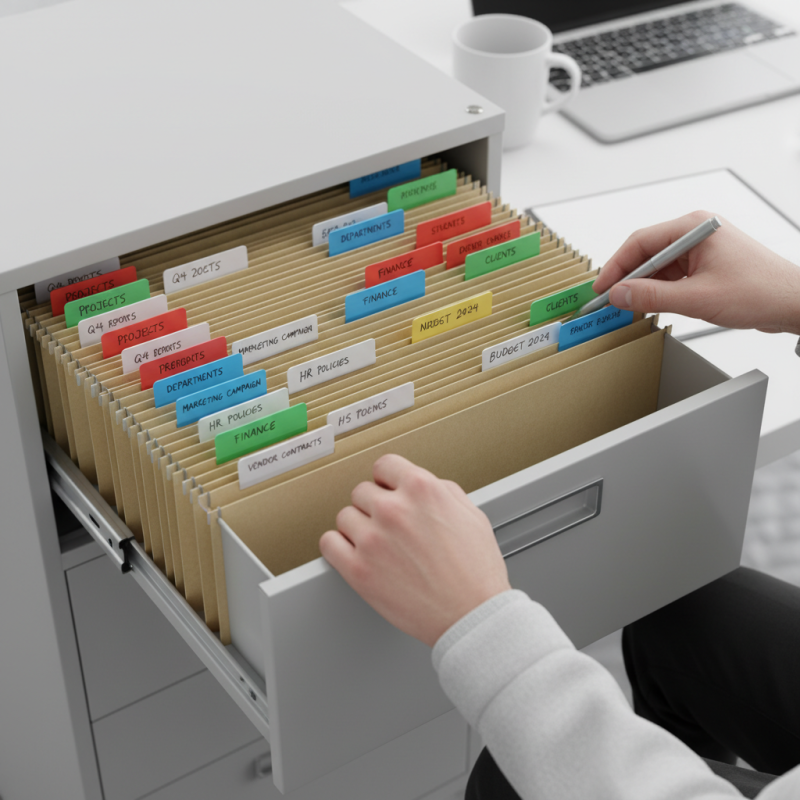
Assessing your current filing system is the first step to improving efficiency. Take a good look at how you store and organize documents. Are your papers cluttered or scattered? Are important documents hard to find? Identify what works and what doesn't. This will help you understand your filing needs.
Consider the types of documents you frequently access. If you often search for contracts, labels them properly. Use clear categories, such as legal, personal, and financial. Don’t forget about digital files. Cloud storage is essential today. Yet, many overlook this aspect.
Also, think about how often you use each document. If some papers haven’t been touched in years, consider whether you still need them. For items you rarely access, alternative storage solutions might be more suitable. Reflect on the overall accessibility of your system. What can you improve? Regular reviews can lead to a more organized and effective filing cabinet.
Organizing a filing cabinet effectively can significantly impact productivity. According to research by the International Data Corporation, employees spend around 20% of their time searching for documents. This can be reduced by using an efficient categorization system. Begin with high-level categories such as “Financial,” “Legal,” and “Employee Records.” Under each category, break down further into specific subcategories. For instance, under “Financial,” you could have “Invoices,” “Tax Documents,” and “Budgets.” This structure allows for quicker retrieval of needed documents.
Visual cues can enhance document retrieval. Use color-coded labels or tabs for each category. This simple method aids in immediate recognition. A University of Illinois study suggested that visual organization can improve recall by 50%. While categorizing, it’s essential to regularly review and eliminate outdated documents. Holding onto unnecessary paperwork can lead to clutter and confusion. Aim for a balance between sufficient storage and clean space.
Part of the process involves acknowledging shortcomings. Many professionals tend to over-categorize or lack a consistent naming convention. This can lead to frustration during searches. Be open to adjustments and innovations in your system. Acknowledge that efficiency is a moving target, and reflect on your system regularly. Adjustments based on your observations can lead to sustained improvements in productivity.
| Category | Subcategory | Importance Level | Retention Period | Storage Location |
|---|---|---|---|---|
| Finance | Invoices | High | 7 Years | Drawer 1 |
| Finance | Bank Statements | Medium | 3 Years | Drawer 1 |
| Legal | Contracts | High | Indefinitely | Drawer 2 |
| HR | Employee Records | High | 7 Years | Drawer 3 |
| Miscellaneous | Projects | Low | Until Completion | Drawer 4 |
Choosing the right filing tools can significantly impact your efficiency. Use sturdy file folders to keep documents organized. Choose colors that correspond to categories. For example, blue for bills and red for urgent matters. This helps you quickly identify what you need.
Investing in dividers can also boost your organization. They allow you to separate different sections within a drawer. Make sure the labels are clear and easy to read. Consider using a label maker for a professional touch.
Remember, it's essential to regularly review your system. You may realize that some categories don't serve you well. Reflect on what documents you frequently access and adjust accordingly. Simplification can lead to robustness in your filing system. Aim for an organized space that promotes productivity.
Labeling your filing cabinet effectively is crucial for maintaining organization. Clear labels save time. They help you quickly locate important documents. Choose a labeling system that is simple yet descriptive. Use categories that resonate with your work. Consider generic labels like "Invoices" or "Reports." This way, you minimize confusion.
Consistency is vital in your labeling practices. Whether you decide on color coding or simple text labels, stick with it. Uniformity not only enhances clarity but also reinforces your filing system. When every label looks similar, it becomes easier to identify folders at a glance. Inconsistencies can lead to chaos. Reflect on your personal preferences. If a label doesn’t make sense, change it.
Think about including specific details on labels. For example, instead of just "Contracts," use "Contracts 2023." This adds context and reduces search time. Availability of dates or project names can also be beneficial. However, be mindful of clutter. Too much information can be overwhelming and lead to confusion. Regularly review your labeling system. Don’t hesitate to discard what doesn’t work anymore.
A well-organized filing cabinet can significantly improve your efficiency. Establishing a regular maintenance schedule is essential for keeping things on track. Choose a specific day each month to review your files. This helps prevent clutter from building up. During this time, assess what you need and what can be discarded.
Ensure that you categorize documents properly. Use clear labels to simplify the process. After each review, take a moment to rearrange any disorganized files. This habit will save you time in the long run. You may notice some files that haven’t been touched in months. Consider if they truly belong in your cabinet.
Reflect on your filing habits. Are there documents you keep out of habit? Regular maintenance shouldn’t feel like a chore. It should empower you to stay organized. If you find certain categories are consistently messy, rethink your system. Adaptability is key for effective filing.
: Take a good look at how you store documents. Identify clutter and hard-to-find items.
Consider frequently accessed documents. Properly label contracts and use clear categories like legal and financial.
Digital files are crucial today. Many overlook cloud storage which can greatly improve organization.
If papers haven’t been touched in years, reconsider their necessity. Alternative storage may be better.
Effective labeling helps locate documents quickly. Clear labels save time and enhance organization.
Stick with a simple labeling system. Consistency reduces chaos and improves clarity in your filing system.
Include specific details like dates. Too much information can cause confusion, so find a balance.
Establish a monthly review schedule. This keeps your filing system organized and prevents clutter.
Assess your filing habits. Do you keep documents out of habit? Adapt your system as needed.
If a category is messy, rethink your organization. Adaptability is key to maintaining an effective filing system.
To effectively understand "How to organize a filing cabinet for maximum efficiency," it is essential to start by assessing your current filing system. Identify areas that need improvement and determine your specific organizational needs. Once this is established, categorize your documents based on their types to facilitate easy access and retrieval. This methodical approach not only saves time but also enhances productivity.
Choosing the right tools and supplies is crucial for a well-organized cabinet. Consider investing in folders, binders, and dividers that suit your needs. Implementing consistent labeling practices will further enhance clarity, making it easier to locate documents quickly. Lastly, establish a regular maintenance schedule to keep your filing cabinet organized and relevant, ensuring your system remains efficient over time. By following these steps, you will maximize both the efficiency and effectiveness of your filing cabinet.

Correo Office