Why Use China Top 10 Filing Cabinets in Small Offices?

Time:2026-09-24 Author:Aria
0%

Small offices cannot afford wasted floor space, slow retrieval, or furniture that becomes obsolete after one lease cycle. This is why China’s top 10 filing cabinets deserve closer attention. Chinese manufacturers now offer compact steel cabinets, mobile pedestals, lateral units, and fire-resistant models for different workplace needs. Their value depends on more than appearance. Buyers should examine drawer capacity, load ratings, locking systems, powder coating, delivery reliability, and after-sales support.

Space matters greatly.

JLL’s 2024 Global Office Fit-Out Cost Guide highlights the pressure businesses face when controlling fit-out budgets and improving workplace efficiency. A filing cabinet that uses vertical space can reduce clutter without requiring expensive floor expansion. CBRE’s 2024 Asia Pacific Office Occupier Survey also reflects the growing importance of flexible workplace planning. Storage must adapt as teams share desks, work remotely, or reorganize departments. That makes the question “Why use mobile filing cabinets in small offices” especially practical. Mobile units can move beside a workstation, then return to a storage wall after use.

Still, a ranking cannot fit every office. A legal practice may need stronger confidentiality controls. A design studio may prioritize wide drawers for samples. A start-up may need affordable modular furniture instead. Personal experience also matters: a cabinet with smooth casters feels useful, while a poorly balanced unit becomes frustrating within days. Buyers should verify product tests, material specifications, warranty terms, and supplier credentials before comparing China’s top 10 options. The best choice is not always the cheapest. It is the cabinet that protects documents, saves movement, and remains dependable during daily work.
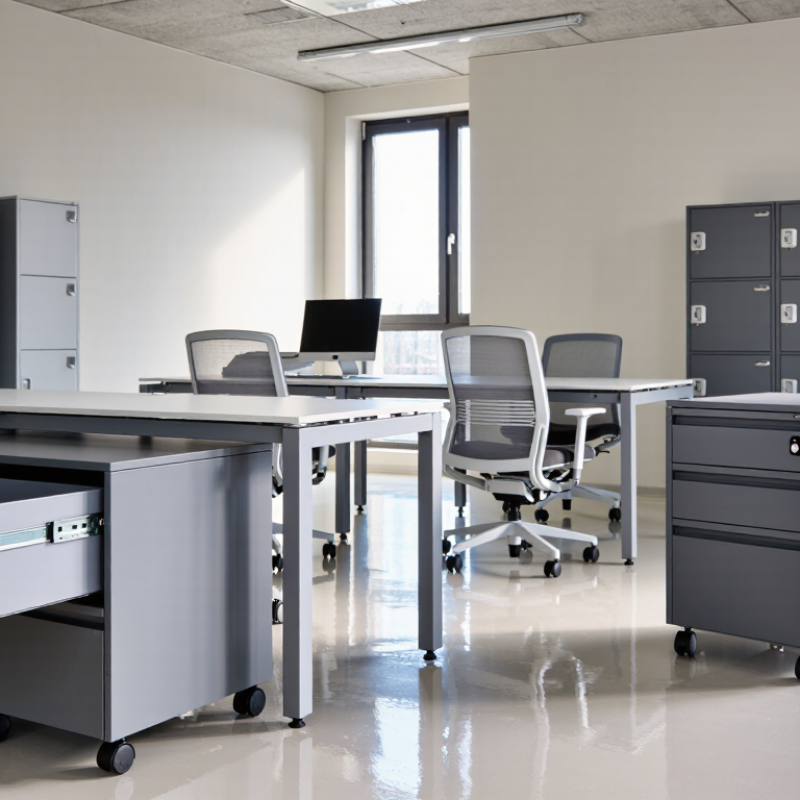
Why Use China Top 10 Filing Cabinets in Small Offices?

A4 Capacity: 210 × 297 mm Files in 300–900 mm Cabinet Footprints

A4 sheets measure 210 × 297 mm, but a cabinet needs more room than the paper itself. Folders, hanging rails, and drawer walls all reduce usable space. In a small office, cabinet footprints from 300 to 900 mm wide can fit different storage needs. A narrow 300 mm unit may suit a few active folders, while a wider cabinet can hold shared records without crowding each drawer.

Check the internal drawer dimensions before choosing. A drawer should accept A4 files without bent corners or tight rails, and its usable depth matters as much as its width. Measure the folders you already use. Good fit matters. Capacity claims can be misleading when they ignore folder thickness or drawer layout. A 600 mm cabinet with several shallow drawers may store less than expected; a 900 mm model may also waste floor space if records are sparse. There is no perfect size. Leave room to open drawers fully, and test one loaded drawer if possible. That small check can prevent a frustrating fit later.

A4 Files and Small-Office Cabinet Widths

A4 paper measures 210 × 297 mm. The chart compares those dimensions with cabinet width options from 300 to 900 mm. These width values are reference points, not a guarantee of usable internal space or storage capacity.

Space Planning: 30–42-Inch Heights for Compact Small-Office Layouts

In a compact office, a 30–42-inch filing cabinet can preserve sightlines while keeping frequently used records within easy reach. A 30-inch unit often fits beneath a window or beside a desk; a 42-inch model adds storage without reaching the height of many full-size cabinets. Measure the actual room, including door swings, desk corners, and drawer extension. A cabinet that fits on paper may block a chair when its drawers open. Small detail. It matters.

Plan circulation before choosing capacity. The U.S. Access Board’s 2010 ADA Standards specify a 36-inch minimum clear width for accessible routes; this is a useful planning reference, though it does not dictate cabinet height or apply identically to every room. Keep that clear space in mind where people pass the cabinet, and avoid placing open drawers across the route. Check finished dimensions, not just the cabinet body. Handles and protruding files can add a few inches. In practice, a lower unit can make a tight office feel calmer, but it may require more frequent filing or a second cabinet. That trade-off is easy to overlook.

Safety Compliance: ANSI/BIFMA X5.9 and ISO 7170 Stability Benchmarks

Small offices often place filing cabinets beside desks, near walkways, or beneath shelves. A cabinet that tips when a drawer is open can injure someone and scatter files. That is why safety testing matters. ANSI/BIFMA X5.9 and ISO 7170 include test methods for storage units, examining factors such as strength, durability, and stability. Their procedures help buyers compare performance using more than appearance or advertised capacity. A standard is not a guarantee that every cabinet suits every room.

Stability depends on the cabinet’s design and how people use it. Tests can assess tipping risk under defined conditions, including loaded drawers, but actual results vary by model and setup. Check the product’s test documentation, stated load limits, and any instructions for anchoring. Keep heavy files in lower drawers. Open one drawer at a time, and avoid leaning on an extended drawer. Simple habits matter.

In a narrow office, measure the floor area and drawer clearance before choosing a cabinet. An uneven floor can also affect stability; a cabinet may rock slightly even when it passed a test. That detail is easy to miss. Standards provide useful benchmarks, not a substitute for careful installation, sensible loading, and routine checks for loose hardware.

Why Use China Top 10 Filing Cabinets in Small Offices? - Safety Compliance: ANSI/BIFMA X5.9 and ISO 7170 Stability Benchmarks

No. Filing Cabinet Configuration Indicative Width × Depth × Height (mm) Small-Office Use Safety and Compliance Check
1 Two-drawer vertical cabinet 460–500 × 620–700 × 700–800 Compact personal filing beside a desk Request model-specific stability and drawer-load test documentation; confirm the tested setup matches the cabinet supplied.
2 Four-drawer vertical cabinet 460–500 × 620–700 × 1,300–1,450 Higher paper capacity in a narrow floor space Check stability with drawers loaded and opened as specified by the applicable test procedure; ask about anti-tip provisions.
3 Two-drawer lateral cabinet 900–1,000 × 450–500 × 700–800 Low storage that can also support a work surface Verify the relevant storage-unit stability and strength tests, including the configuration and loading conditions in the report.
4 Three-drawer lateral cabinet 900–1,000 × 450–500 × 1,000–1,100 Shared team files with a moderate footprint Check stability evidence for drawers in use and confirm any interlock or anti-tip feature is included on the delivered model.
5 Mobile two-drawer cabinet 400–450 × 500–600 × 550–650 Personal storage that fits under many desks Ask whether stability was assessed with the casters and brakes fitted; verify caster locking instructions and drawer-load limits.
6 Mobile three-drawer cabinet 400–450 × 500–600 × 600–700 Under-desk storage for frequently used documents Confirm stability test coverage for the mobile configuration and check that the user instructions explain safe drawer use.
7 Compact lockable cabinet 400–500 × 450–600 × 700–1,000 Restricted-access storage in a shared office Check that compliance evidence identifies the lock, drawers, and cabinet configuration being evaluated; a lock alone is not a stability test.
8 Fire-resistant filing cabinet 500–700 × 600–800 × 700–1,500 Protection of selected paper records Assess stability under applicable storage-unit methods separately from fire-resistance claims, which require their own supporting evidence.
9 Tambour-door filing cabinet 800–1,000 × 400–500 × 1,000–1,500 Shared storage where hinged doors need extra clearance Request evidence for the complete unit, including the door system and intended loading; check installation and leveling instructions.
10 Four-drawer lateral cabinet 900–1,000 × 450–500 × 1,300–1,500 Centralized team filing where floor area allows Prioritize model-specific stability reports and documented safe-loading instructions; secure the unit as directed by the manufacturer.

How to interpret this table: The ten configurations are practical options, not a market ranking or a list of tested products. Dimensions are indicative planning ranges, not requirements set by either standard; actual sizes vary by manufacturer. ANSI/BIFMA X5.9 and ISO 7170 address performance testing for storage units, including relevant strength, durability, and stability assessments. They do not establish that a product complies based on its dimensions alone. Before purchase, request a test report identifying the exact model, configuration, test method, and loading conditions, and follow the supplied installation, anchoring, and loading instructions.

Value Analysis: 0.6–1.2 mm Steel, Load Ratings, MOQ, and Service Life

Why Use China Top 10 Filing Cabinets in Small Offices?

For small offices, steel thickness changes value more than appearance. Cabinets using 0.6 mm steel are lighter and usually cheaper. They can hold ordinary documents without excessive drawer weight. A 1.0–1.2 mm body offers better resistance to dents, twisting, and repeated movement. However, thicker steel does not automatically mean safer storage. ANSI/BIFMA X5.9-2019 evaluates storage units for strength, durability, and stability. Buyers should request test records, not rely on thickness alone.

Load ratings need careful checking. A supplier may quote total cabinet capacity, while each drawer carries much less. Ask for the tested rating per drawer, including suspension hardware. A practical small-office target is often 35–45 kg per drawer for standard files. Overloading creates friction and alignment problems. It also shortens service life. Good users label heavy folders and keep the top drawer lighter.

MOQ affects the real purchase price. Small orders may include higher packaging, tooling, or delivery charges. Top Chinese manufacturers may offer better customization, but their minimum order quantities can exceed a small office’s needs. Request a sample before approving a larger batch. With normal indoor use, a well-maintained cabinet may serve for 8–12 years, although facility-management budgets often use different replacement cycles. Rust near floor contact is a common weakness. I would inspect welds, drawer runners, coating thickness, and spare-part access. Price comparisons often miss these details.

Supplier Verification: ISO 9001, Fire Ratings, Lead Times, and Warranty Data

Why Use China Top 10 Filing Cabinets in Small Offices?

Supplier verification matters more than a polished catalog. In small offices, a filing cabinet may hold contracts, payroll records, and backup drives. I would request the supplier’s current ISO 9001 certificate, then verify its scope, issuing body, and expiration date. ISO 9001 supports process control, but it does not prove cabinet strength or fire resistance.

Fire claims need closer inspection. Ask for test reports showing the standard, tested model, duration, and laboratory details. A “fireproof” label alone is weak evidence. Check whether the tested cabinet matches the production sample. During inspection, measure drawer alignment, lock operation, coating thickness, and base stability. Small defects become annoying every day. Very annoying.

Lead times should appear in a written quotation. Confirm sample time, production time, inspection time, shipping preparation, and holiday closures. A supplier promising ten days may exclude packaging or port delays. I once treated a short lead time as a benefit and ignored vague delivery terms. That was poor judgment.

Warranty data should specify coverage, exclusions, response time, replacement procedures, and freight responsibility. Ask how claims are recorded and resolved, not merely whether a warranty exists. Compare these documents across several high-ranked suppliers. The lowest price may hide thinner steel, weaker slides, or limited after-sales support. A careful buyer keeps certificates, inspection photos, and approved specifications in one file. That record protects the purchasing decision when something changes.

FAQS

What cabinet height works well in a compact office?

A 30-inch cabinet can fit beneath a window or beside a desk. A 42-inch unit adds storage while usually preserving more open sightlines than a full-size cabinet.

What should I measure before choosing a cabinet?

Measure the room, door swings, desk corners, and drawer extension. Check handles and protruding files, too. A cabinet may fit on paper but block a chair.

How much clear space should I leave around the cabinet?

Keep routes open, especially where people pass. A 36-inch clear width is a useful accessibility planning reference, but its application depends on the room.

How does steel thickness affect cabinet value?

A 0.6 mm body is lighter and often less expensive. Steel around 1.0–1.2 mm may resist dents and twisting better, but thickness alone does not prove quality.

What load rating should I check?

Ask for the tested capacity of each drawer, including its suspension hardware. A practical target for standard files is often 35–45 kg per drawer. Keep heavy folders out of the top drawer.

How can I check cabinet strength and stability?

Request test records for strength, durability, and stability. Look at welds, drawer runners, coating thickness, and access to spare parts. A polished finish is not enough.

Why does the minimum order quantity matter?

Small orders may cost more because of packaging, tooling, or delivery charges. A supplier’s customization options may not suit a small office’s order size.

How long might a steel filing cabinet last?

With normal indoor use and maintenance, it may serve for 8–12 years. Rust near floor contact can be a weak point. Check there.

Does a lower cabinet always save space?

Not necessarily. It may make a tight office feel calmer, but limited storage can mean more frequent filing or a second cabinet. That trade-off deserves a closer look.

Conclusion

Choosing the right filing cabinet helps a small office make better use of limited space while keeping records accessible and organized. Consider cabinets designed for standard A4 files measuring 210 × 297 mm, with footprints between 300 and 900 mm. Heights of 30–42 inches can fit compact layouts without overwhelming the room. For flexible storage, ask whether mobility is important: Why use mobile filing cabinets in small offices? They can be repositioned as work areas change, provided their size and load capacity suit the intended use.

Compare construction and performance as well as price. Steel thickness of 0.6–1.2 mm, stated load ratings, minimum order quantities, and expected service life all affect overall value. Check product documentation for relevant ANSI/BIFMA X5.9 and ISO 7170 stability benchmarks, and verify the supplier’s ISO 9001 status, any claimed fire ratings, lead times, and warranty terms. These checks help buyers assess safety, durability, and service expectations before making a purchase.

Aria

Aria

Aria is a dedicated marketing professional with a deep passion for innovative strategies and a keen understanding of our company's product offerings. With a wealth of experience in the industry, Aria excels at crafting engaging content that highlights the unique features and benefits of our......